




Let’s be real—depression is way more complicated than most people think. It’s not just “feeling sad” or something you can snap out of with positive thinking. Your whole body is involved, and understanding why you feel the way you do can be a total game-changer when it comes to actually feeling better.
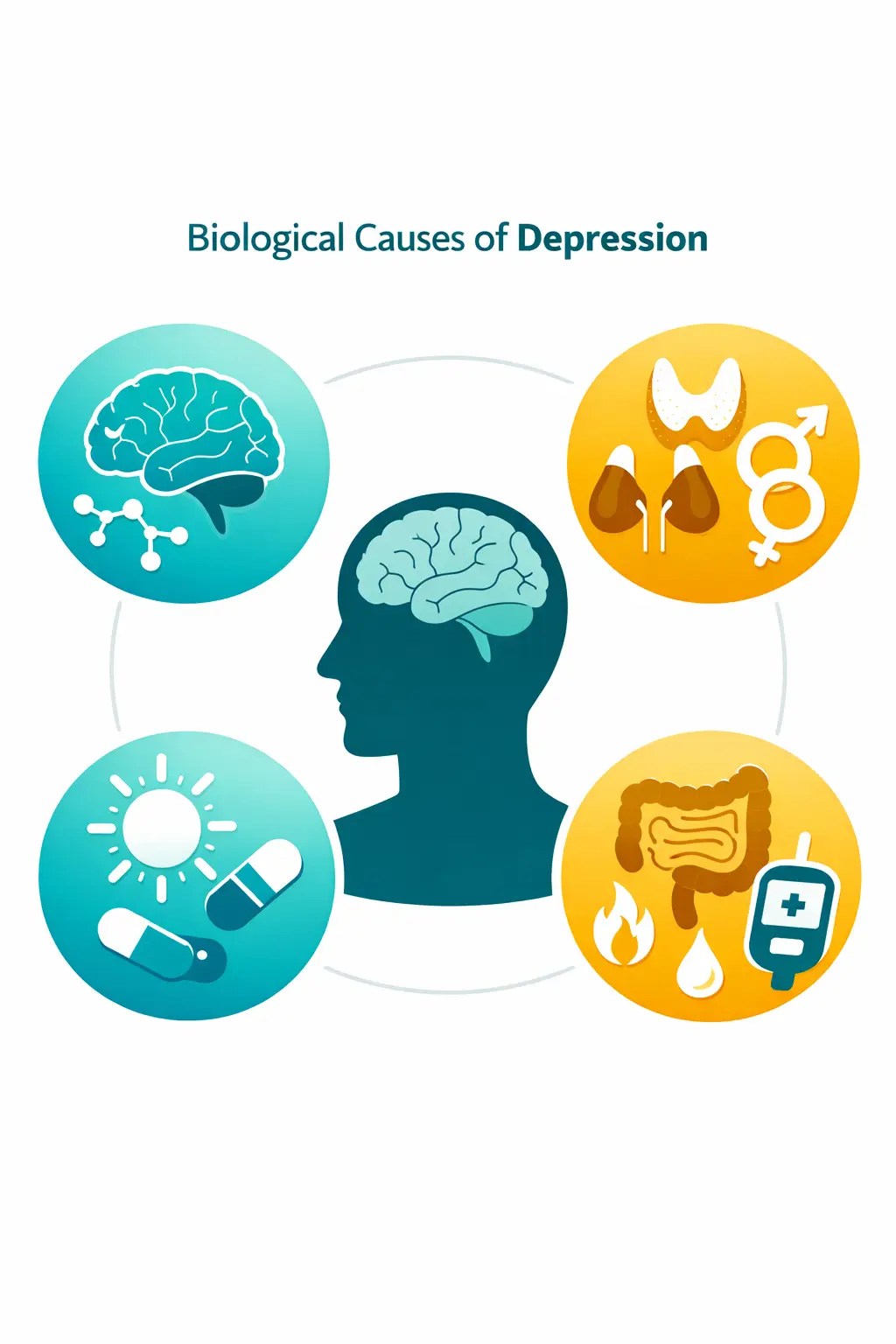
Here’s the thing: there are actually four main types of depression, and each one has different biological causes happening under the hood. Once you start connecting the dots between your symptoms and what’s going on in your body, you can start addressing the root issues—not just slapping a band-aid on top.
So let’s break it down.
This is probably what most people picture when they think of depression. We’re talking persistent sadness, negative thought spirals, crying spells, and that heavy feeling of “the blues” that just won’t lift. You might also experience anxiety, trouble sleeping, increased physical pain, and in more serious cases, thoughts of suicide.
What might be causing it? Low serotonin is the usual suspect here, but it’s not the only one. Adrenal dysfunction, an underactive thyroid, vitamin D deficiency, and even certain genetic factors can all play a role.
Not all depression looks like sadness. Sometimes it shows up as irritability, impatience, sudden anger, mood swings, and even physical symptoms. You’re snapping at people, feeling on edge, and your emotions are all over the place.
What might be causing it? Sex hormone imbalances are a big one here, along with blood sugar rollercoasters, adrenal dysfunction, food sensitivities, neurotransmitter imbalances, and high glutamate levels.
Ever feel like you’re running on empty? This type shows up as crushing fatigue, zero motivation, brain fog, difficulty concentrating, and an inability to feel pleasure in things you used to enjoy. It’s like someone turned down the dimmer switch on your whole life.
What might be causing it? Your body might not be producing enough “uppers”—we’re talking dopamine, norepinephrine, and epinephrine (the catecholamines). But it could also be low thyroid function, adrenal hormone issues, B vitamin deficiencies, gut health problems (dysbiosis), or methylation issues affecting how your body processes nutrients.
This type follows a pattern. Maybe it hits every winter, lines up with your menstrual cycle, or showed up after having a baby (postpartum depression). The timing is a major clue.
What might be causing it? Sex hormone fluctuations, low vitamin D (especially in those darker months), and adrenal dysfunction are the primary culprits.
Yeah, that’s actually pretty common. Depression is incredibly individual, and since there are so many potential causes, you might be dealing with more than one. Plus, these imbalances love to create chain reactions—adrenal dysfunction, for example, can throw off your neurotransmitter production and your thyroid function. It’s all connected.
If you’re reading this and checking off a bunch of these symptoms, then clinically speaking, maybe. But here’s the important part: the label isn’t the point. Finding and treating the underlying cause is what actually gets you feeling better.
The standard tool most doctors use is the PHQ-9 Questionnaire —a quick 9-question assessment that identifies depression and ranks its severity. It’s widely used and validated, though it’s worth noting it was funded by Pfizer and tends to recommend pharmaceutical treatment for moderate scores (10 and above).
Here’s the catch: the PHQ-9 tells you if you’re depressed, but it tells you absolutely nothing about why.
That’s where a more comprehensive approach comes in. Looking at factors like inflammation, thyroid and adrenal function, neurotransmitter levels, and other biological markers can help you start building a map of what’s actually going on in your body.
Because at the end of the day, treating the cause beats managing symptoms every time.
Take the free quiz to get a jump start on finding out what’s causing your depression, or for a more comprehensive evaluation check out the Holistic Mood Assessment.
The bottom line? Depression isn’t one-size-fits-all, and neither is the solution. Your body is giving you clues—it’s just a matter of learning how to read them.